


Creaking when turning the neck, pain, decreased mobility, headaches – all are symptoms of cervical osteochondrosis.Relieving symptoms with painkillers does not solve the key problem and requires a comprehensive approach.Home treatment combines folk remedies, massage, exercises and other measures.

drug treatment
Traditional treatment of cervical osteochondrosis includes the use of the following medications:
- pain relievers and anti-inflammatory drugs;
- chondroprotectant;
- Warming ointment;
- anesthetic gel;
- Vasodilators.
This treatment usually aims to relieve symptoms.
do exercises
Osteochondrosis is considered incurable and physical activity is the only measure that can help achieve stable remission.The main conditions for obtaining results are regularity and consistency.
Therapeutic exercises can help prevent and halt the progression of osteochondrosis.Exercise accelerates blood flow to the cervical spine, thereby promoting increased nutrition to all its tissues.
Important!It is not recommended to start a set of exercises in severe pain.
Effective exercise therapy complex:
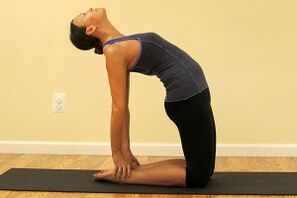
- Starting position: Sit in a chair with your back and neck straight.Slowly turn your head toward your left and right shoulders (five to ten times).
- Starting in the same position, lower your head smoothly until you reach your chest and back (ten times).Do not tilt the back of your head back as this is harmful to the neck.
- Starting in the same position, move your head in smooth circles to the left and right (three to five times).
- Starting in the same position, move your neck and chin back to parallel to the floor line (ten reps).The neck should not be straight.These movements are especially useful for people who move their head and neck forward while working at a desk.
- Starting position: Sit at a table with one elbow on the table.Place your temples on your palms and press your head against your temples, using your hands to provide resistance (ten seconds for five to ten approaches, ten seconds for rest).
- Starting position: Sit at a table with your back and neck straight.Press your forehead into your palms and use your hands to provide counter-resistance (five to ten approaches over ten seconds, ten seconds off).This exercise can develop the habit of sitting at a table correctly.
- Starting position: Stand with back straight and arms resting on body.Raise your shoulders and hold for ten seconds, then slowly lower them (closer to ten seconds).This relaxes your neck muscles perfectly while stretching them.
- Starting position: Lie on your stomach with your arms resting on your body.Slowly raise and lower your head, resting for twenty seconds (ten times).
During class, the cervical spine should not move suddenly.You also shouldn't allow yourself to feel uncomfortable or overexert yourself.Specific comprehensive physical therapy for osteochondrosis should be performed daily.
Practice with a bottle
A plastic bottle filled with water can serve as an excellent device for cervical spine exercises for osteochondrosis.
You need to choose cylindrical eggplants of 1.5 liters without protrusions or ribs.To keep it soft, it's filled with 80% water.
Lie on your back with your arms across your body and the bottle under your neck.Do the following exercises:
- Head forward/backward movement (5 times);
- Turn your head left/right leisurely (5 times);
- Make circles with your head to the right and left (5 times).
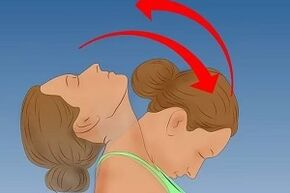
Neck warm-up with a bottle can be performed alternately with other gymnastics.
therapeutic massage
Massage is the mainstay of home treatment for osteochondrosis.It relieves spasms, increases blood flow and lymphatic flow, and reduces inflammation.Regular use can restore neck mobility.
For osteochondrosis of the neck, self-massage has been shown to be effective because this is the most convenient area to massage.
Important!Never put pressure on the spine itself.
Self-massage techniques for neck osteochondrosis:

- Sit in a chair or lie on the floor and use your fingers to massage your neck muscles and the back of your head.Then work the area above and between your shoulder blades.For headaches, gently massaging the temporal area above the ears and down to the back of the head can help.
- Sit at a table with the elbow of your left hand on the table and the index finger of your other hand exploring the muscles on the right side of your neck.The painful area should be fully kneaded in circular motions.Repeat the same operation on the other side and continue massaging the cervical nodules.
- Use the edge of your palm to follow the neck from bottom to top, then to the shoulders.Change hands.
- Pinch the muscles in the collar area.
The procedure begins and ends with gentle caressing the neck and shoulders.
Roll with a rolling pin
Previously, rolling pins were commonly used to treat neck pain.You need to lie on it and roll it underneath you.However, this approach is not acceptable during exacerbation of osteochondrosis.
Massage with honey
Warm a little honey in a water bath (no more than 40°C) and apply it to the neck and collar area.Then you need to "glue" the palm to the body and peel it off.Massage until signs of skin redness appear (no more than 10 minutes).Afterwards, wash away the remaining honey and dirt and wrap the neck.
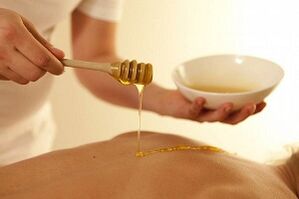
Repeat this process 2 times per week.People with high blood pressure are contraindicated in this type of massage.
traditional medicine
Folk remedies for treating osteochondrosis include compresses, friction, ointments, herbal decoctions and tinctures.They are inexpensive, effective and have minimal side effects.
You need to consult your doctor before using these recipes.
compression
Compression warm-up relieves tension in neck and shoulder muscles and significantly reduces pain caused by osteochondrosis.
idea!Burdock or cabbage leaves are suitable for sealing, not cellophane.
Different Compression Methods for Treating Osteochondrosis:
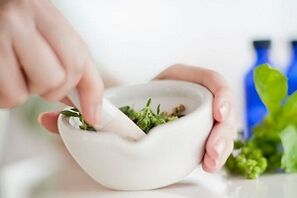
- Grate raw potatoes and mix with equal proportions of liquid honey.Apply to neck, cover and wrap with plastic.Leave on for about 1-2 hours.
- Steam 1 tablespoon chopped burdock leaves with 1 cup boiling water.When the broth has cooled to an acceptable high temperature, strain and soak gauze (natural fabric) folded in several layers.Leave the compress on for 20 minutes, then remove and wrap your neck with a scarf.
- Pour 1 tablespoon of the mixture of ground herbs (dandelion, burdock leaves, and St. John's wort) into 1 cup of boiling water and place in a water bath for 15 minutes.When the broth has cooled to about 60°C, strain and compress.Leave it on for about half an hour.
- A piece of cloth soaked in kerosene is placed around the neck and covered with cellophane, and a layer of absorbent cotton is placed over it for insulation.Exposure time is one hour.
- Bake a small loaf of oatmeal, rye or whole wheat flour, place it hot on the sore area, cover it and keep it there until it cools.This operation can be done once or twice a day.
- Alcohol compress: Mix fifty grams of aloe vera juice with four tablespoons of honey and one hundred milliliters of vodka (alcohol).After thirty minutes, the mixture is ready to use.Apply the composition to a damp cloth and leave it on your neck overnight.The given amount is enough to complete the entire course of treatment.
Compression is particularly effective when osteochondrosis is advanced.
rub
Rubbing is convenient because you don't have to sit with your neck wrapped in cellophane for long periods of time.Friction can promote blood circulation, and the alcohol in the ingredients can make the ingredients penetrate into the skin faster.
Friction disease:

- A cup of grated radish, half a cup of honey, two tablespoons of salt (coarse) are poured into 250 ml of vodka.This tincture should be applied to the affected area twice daily for a week.This medication can be taken by mouth, one teaspoon on an empty stomach, twice daily.
- Mix mustard powder, vodka, camphor alcohol and the whites of three eggs in equal proportions.The composition should be applied overnight.It is very helpful in chronic osteochondrosis.
- Mix 300 ml of alcohol, 10 ml of iodine and camphor alcohol.This recipe is for pain relief.
- Mix red elderberries with alcohol (1:4), leave for a week and strain.The composition is also suitable for compresses, but for this purpose it must be diluted with water in a ratio of 1:4.
Important!After rubbing the heated neck area, you need to wrap it with a warm and soft scarf (made of wool).
Alcohol preparations should not be used on external skin lesions.
ointment
Ointments made from natural ingredients are cheap and easy to use.The consistency helps the composition stay on the skin longer.
Therapeutic ointments:
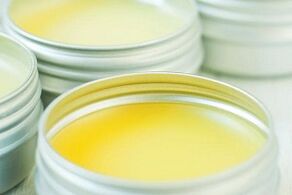
- Mix softened butter, grated ginger and garlic in equal proportions.The composition relieves pain in the back of the head and shoulders.
- Dissolve 10 g mumiyo in 1 tbsp.Spoon warm water and mix with liquid honey.For ease of application, the ointment should be scooped out with a teaspoon heated over a fire.Lubricate the painful area and massage for about 5 minutes, then repeat application and rub for another 1-2 minutes.After surgery, cover the neck with a layer of cotton wool, polyethylene, and a warm scarf.
- 1 tbsp.Mix a spoonful of crushed hop cones with softened butter in equal parts.Rub into skin 1-2 times daily.
- 2-3 tbsp.Pour a spoonful of crushed oregano into 500 ml of vegetable oil or olive oil, leave it in a dark place for about 10 hours, squeeze it out and rub it on the affected area.
While applying the ointment, you can gently massage your neck.
Oral dosing recipes
External treatment methods can be supplemented by beneficial tinctures and decoctions taken internally.Many of them have restorative properties, are rich in vitamins, and have effects on the entire body.
Pharmaceutical compositions for oral treatment of osteochondrosis:

- Add 2 teaspoons chopped parsley root to 2 cups boiling water, simmer for about an hour, and strain.Take 1 tbsp.Take with a spoon before breakfast and dinner.
- Grind the dill and parsley seeds and soak in a water bath for 15-20 minutes.Take 1 teaspoon of the resulting decoction on an empty stomach in the morning.
- Sprinkle fresh pine sprouts (up to 2 cm) with sugar (or honey) in a 2:1 ratio.Place the container in a cool, dark place for 2-3 weeks until a dark syrup forms.Take 1 tablespoon 3 times daily.
- Grind 3 lemons in a meat grinder, put 4 heads of garlic (whole), pour 1.5 liters of hot water (60°C) and leave for a day.Infuse 100 grams on an empty stomach.
- Chop the shelled pine nuts, add vodka and keep in a dark place.After 7 days, strain the tincture and take 1 tablespoon daily.
The use of decoctions and tinctures accelerates the recovery process from the acute phase of osteochondrosis.Pine syrup is especially recommended during this period.It has powerful anti-inflammatory properties.
supportive care
Traditional treatments can be supplemented by hydrotherapy, warm-ups, saunas or baths.
Contrast shower

Contrast showers—soaking the neck area with alternating cold and warm water—can significantly improve the condition of osteochondrosis.
herbal bath
For pain, take a bath with a decoction of calamus root, birch buds, chamomile, and motherwort.Pour the soup into warm water and the treatment lasts about 20 minutes.This surgery can quickly relieve pain and cramping during osteochondrosis progression.
People with high blood pressure and cardiovascular disease should not take hot baths.
sauna
Treatment of osteochondrosis must include baths and saunas.The paired muscles relax and the clamp in the disc disappears.Before treatment, you can lubricate your neck muscles with honey and wrap them in a towel.It is also good to use heated stones in this area.
You can go to the bathhouse or sauna 1-2 times a week, except in the acute phase.Otherwise, the "steam room" will only exacerbate the inflammatory process.
warm up

Heat relieves pain well, so treatment of osteochondrosis needs to be supplemented with thermal therapy.Mustard paste, alcohol (vodka), pepper paste or ointments are suitable for home use.You can use a cloth bag filled with hot salt or sand and apply it to your neck.
applicator
The applicator is a special massager with spikes that treat osteochondrosis.It helps improve metabolic processes in specific areas, reducing pain and inflammation.Place the applicator under and against the neck to stimulate new reflex zones.
The duration of the treatment starts from 1-2 minutes and gradually increases to half an hour.The course of treatment is 2 weeks.After a 7-day break, the course can be repeated.You should not use this massager if you have skin conditions on your neck or a tendency to bleed.
There are several modifications to the applicators sold for cervical osteochondrosis reflexology.
Leech treatment
Leech therapy has been a proven technique in the treatment of various types of osteochondrosis.Leeches secrete hirudin that thins the blood, relieves swelling and inflammation, and normalizes the function of nerve cells.Leech therapy relieves pain, reflexively relaxes the neck muscles, and promotes better penetration of the medication into its destination.
Leeches were placed on the back of the neck and shoulders where the pain was most severe.The number of sessions for osteochondral treatment is approximately 7, with a few days of rest in between.Repeat sessions within one month.
A comprehensive approach to treating osteochondrosis at home can allow you to achieve stable relief and regain mobility in your neck.Traditional and alternative medicine methods are not a substitute for taking medications prescribed by your doctor.In the late stages of the disease, you should not self-medicate.If there are signs of deterioration, especially severe discomfort such as numbness of the limbs and dizziness, you should seek medical attention immediately.